Latino Voices Rise Ahead of the 2026 Midterms
- Marco Gutierrez
- 9 minutes ago
- 8 min read

A major voter push ahead of the 2026 midterms is already taking shape, and Latino voters are near the center of it. Reports that four major Latino organizations are joining
forces to mobilize voters should get everyone’s attention, not because civic participation is a problem, but because representation deserves a serious debate.
Latinos should vote. Hispanic Americans should register, study the issues, ask hard questions, volunteer, run for office, and show up at the ballot box. That part is not complicated.
The harder question is this: who gets to speak for Latino families?
For too long, the political class has treated Latino voters as if they belong to one side, think one way, and want the same policies from coast to coast. That was never true. It is even less true now.
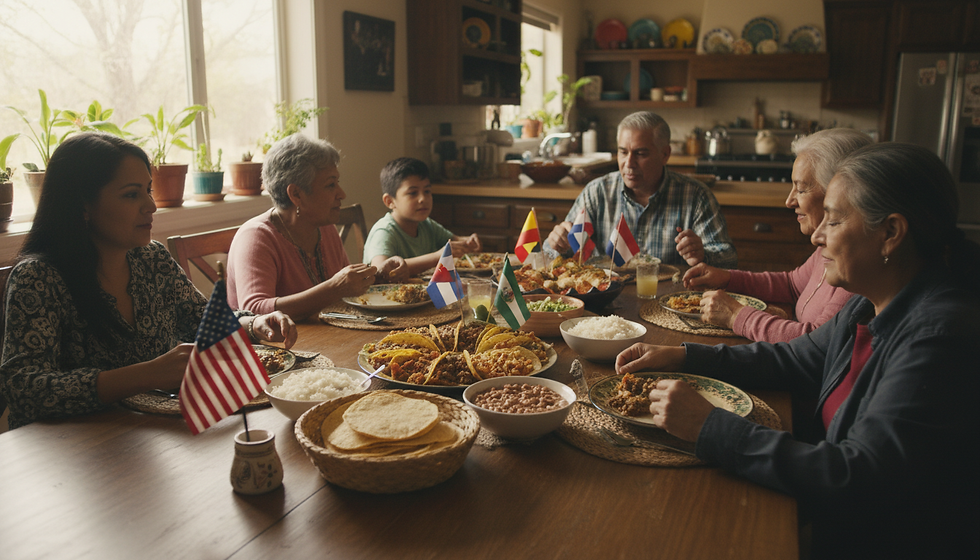
Latinos are immigrants and native-born citizens. We are small business owners, military families, nurses, truck drivers, teachers, police officers, farmworkers, pastors, students, and retirees. We live in border towns, suburbs, big cities, farming communities, and rural counties. Some families have been in the United States for generations. Others arrived recently with a suitcase, a work ethic, and a dream.
That diversity matters. It should shape the way every political organization talks about the Latino vote.

Latino voters are not a political machine
The phrase “the Latino vote” can be useful in polling and election coverage, but it can also hide more than it reveals. There is no single Latino vote in the way some commentators suggest.
A Cuban American voter in Florida may not view socialism, immigration, and foreign policy the same way as a Mexican American voter in California. A Catholic grandmother in Texas may have different priorities than a young entrepreneur in Arizona. A veteran in Nevada may think first about national security and public safety. A parent in Pennsylvania may care most about schools and the cost of housing.
Even language and identity vary. Some people prefer Hispanic. Some prefer Latino or Latina. Some use Latino American. Others identify first by family roots, such as Mexican, Salvadoran, Puerto Rican, Dominican, Colombian, Cuban, Guatemalan, or Venezuelan. Many simply say American.
That is not division. That is real life.
When organizations claim to represent “the community,” they should be honest about which part of the community they mean. No group, left or right, owns the voice of millions of people. They may represent members, activists, partner organizations, donors, or a policy agenda. That is fair. But it is not the same as speaking for every family with a Spanish last name.
The same rule applies to conservatives. Conservative Latinos should not pretend every Latino is conservative. Liberal groups should not pretend every Latino is progressive. The healthier claim is also the truer one: Latino America contains many political voices, and all of them have the right to organize.
The old assumptions are breaking down
For decades, many campaigns approached Latino voters with a narrow script. They often led with immigration, translated a few ads into Spanish, visited a taco shop before Election Day, and assumed loyalty would follow.
That approach misunderstands the community.
Immigration matters deeply to many Hispanic families. It touches our parents, cousins, neighbors, churches, and businesses. But it is not the only issue, and it is not always viewed the same way. Many immigrants support legal immigration and also want secure borders. Many families can feel compassion for migrants and still expect the government to enforce the law. Many voters can honor their heritage while believing citizenship carries duties as well as rights.
The same complexity appears across nearly every issue.
Latino parents care about the quality of their children’s schools. They care about whether their neighborhoods are safe. They care about whether buying a home still feels possible. They notice food prices, rent, insurance, gas, and interest rates. They want good jobs, fair wages, and the chance to build something they can pass on.
Many families also care about faith. Churches are not side notes in many Hispanic communities. They are places of worship, support, charity, discipline, and belonging. For some voters, faith shapes views on family, education, religious liberty, crime, poverty, and service.
Ignoring those concerns does not make them disappear. It only pushes voters to look for leaders who respect them.

Conservative Latinos have reasons to speak up
The rise of conservative Latino voices should not surprise anyone who listens closely at family gatherings, church events, school pickup lines, and small business counters.
Many Hispanic families came to the United States because they wanted the freedom to work, worship, and build a future. That experience can create a deep respect for opportunity and personal responsibility. It can also create skepticism toward political promises that sound generous but weaken the habits that help families rise.
Conservative Latinos often focus on a clear set of concerns.
Secure borders
A nation has the right to know who enters, to stop drug and human trafficking, and to keep communities safe. Many Latino voters support immigration that is lawful, orderly, and humane. They reject the false choice between compassion and enforcement.
Faith and family
For many families, faith is not a slogan. It is the foundation of marriage, parenting, service, and charity. Voters who care about religious liberty, parental rights, and family stability deserve to be heard without being mocked as outdated.
Economic opportunity
The American Dream still matters. A paycheck, a business license, a trade skill, a first home, and a college degree can change the direction of an entire family. Policies that affect taxes, inflation, energy, licensing, and small business growth reach Latino households in direct ways.
Safe communities
No parent wants crime treated like an abstract debate. Families want safe parks, clean streets, strong police standards, and real consequences for repeat offenders. Supporting public safety and supporting fair treatment under the law can go together.
Educational excellence
Parents want schools that teach children to read, write, think, and compete. They want high standards, safe classrooms, good teachers, and honest communication. Some prefer public schools. Some want charter, private, homeschool, or faith-based options. The common thread is simple: parents want a voice.
Election integrity
Voting rights matter. So does public trust in elections. Many voters believe it should be easy to vote and hard to cheat. That view should not be treated as extreme.
These priorities do not make conservative Latinos less Latino. They reflect a lived experience that is just as authentic as any progressive activist’s experience.
Voter mobilization should invite debate, not demand obedience
If major Latino organizations plan to mobilize voters ahead of 2026, they have every right to do so. Civic organizing is part of American democracy. Registering voters, educating communities, hosting forums, and encouraging turnout are all legitimate.
But mobilization should never become a loyalty test.
A voter outreach campaign that tells Latinos what to think is weaker than one that respects their intelligence. Families do not need political handlers. They need clear information, honest choices, and leaders willing to answer direct questions.
For conservative Latinos, the response should not be resentment. It should be organization.
That means building local networks before election season. It means talking to neighbors in English and Spanish, depending on the community. It means showing up at school board meetings, city council meetings, church events, candidate forums, and neighborhood cleanups. It means recruiting candidates who understand real family concerns because they have lived them.
It also means refusing lazy stereotypes.
Not every conservative Latino is wealthy. Not every progressive Latino is poor. Not every immigrant supports open border policies. Not every Spanish speaker votes the same way. Not every young Latino wants the politics of campus activists. Not every older Latino thinks the same way as their children.
The community is becoming more politically diverse because it has always been diverse. The difference is that more people are now willing to say it out loud.

The “taco politics” moment says something real
The taco has become a lighthearted symbol in many political conversations about Latino outreach. Sometimes it is used with affection. Sometimes it feels shallow. Either way, it points to a larger problem.
Too often, politicians celebrate Latino culture while ignoring Latino convictions.
They want the music, food, festivals, and photo opportunities. But when Latino parents question school content, they get dismissed. When Latino business owners question regulations, they get lectured. When Latino voters support border security, they get accused of betraying their roots. When Latino church members speak about faith, they get treated as if they are standing in the way of progress.
That kind of politics cannot last forever.
Culture is not a substitute for respect. Eating tacos with the community is easy. Listening when the community disagrees is harder.
Real respect means asking better questions.
What do families need to buy their first home?
Why are some children graduating without strong reading and math skills?
How do we protect immigrants who follow the law while stopping criminal networks that exploit vulnerable people?
How do we support police accountability and still keep neighborhoods safe?
How do we make it easier for small businesses to open, hire, and survive?
How do we honor faith communities that quietly do some of the hardest work in America?
These questions do not fit neatly into one party platform. That is exactly the point.
The Latino vote is earned by showing respect
Political parties and advocacy groups should compete for Latino voters. Competition is healthy. It forces candidates to listen. It makes campaigns work harder. It gives families more choices.
But the Latino vote is earned through respect, not assumptions.
Respect looks like policy details, not just slogans. It looks like candidates visiting communities outside election season. It looks like listening to Spanish-speaking grandparents and English-dominant youth. It looks like understanding that a family can love its heritage and still put America first. It looks like hearing a voter say, “I care about the border, my church, my job, my child’s school, and my mortgage,” without reducing that person to a stereotype.
A stronger democracy will not come from treating Latinos as a permanent voting bloc. It will come from treating Latino Americans as citizens with judgment, memory, values, and the right to change their minds.
That is why 2026 matters.
The midterms will not only test parties and candidates. They will test whether America’s political class has learned anything about Hispanic voters. If organizations on the left mobilize with passion, conservative Latinos should respond with the same energy. If one side knocks on doors, the other side should knock too. If one side registers voters, the other side should educate, organize, and compete.
Not with bitterness. Not with fear. With confidence.
Because the message is simple: there is not one Latino voice. There are millions.

A more honest politics is possible
The growing political diversity among Latino voters should be welcomed. It means more people are thinking for themselves. It means old labels are losing power. It means candidates cannot take support for granted.
For Hispanic immigrants and Latino families who believe in secure borders, faith, family, economic opportunity, homeownership, safe communities, educational excellence, and election integrity, the next step is clear. Speak up. Organize. Ask questions. Challenge both parties. Support leaders who respect your values, and hold them accountable after they win.
The 2026 midterms will bring more outreach, more ads, more speeches, and more claims about who represents Latino America. Listen carefully.
The Latino vote is not owned by any party, activist group, or political machine. It belongs to the citizens who cast it.


Comments